Fast-paced roguelite platformer built around aerial combat
ScourgeBringer, from Flying Oak Games, casts you as Kyhra exploring an ancient monolith to confront the Scourge and seek redemption for a ruined world. The game blends high-speed roguelite platforming with lightning-fast hack-and-slash combat and emphasis on air-dashing and mobility across procedurally generated levels. Key elements include persistent upgrades, boss 'Judges', and an adaptive soundtrack that matches fight intensity. It targets players who enjoy precision platformers and demanding action roguelites seeking tight controls and short, intense runs.
What kind of roguelite fuses speed with platforming consequences?
So, you enter a collapsing monolith as Kyhra, where exploration and combat have immediate stakes: surviving room-to-room chaos advances both plot and progression. Runs assemble differently each time because rooms and enemy placement come from procedural generation, which forces continuous adaptation rather than rote memorization. The single-player structure focuses the experience on individual skill, with each successful run revealing more about the Scourge and unlocking long-term options.
How does movement determine your combat approach?
Movement is the primary weapon, shaping how fights play out and how threats are managed. The design supports staying airborne indefinitely by chaining dashes, slashes, and ranged shots, so most encounters reward aerial positioning and constant motion. That emphasis creates a distinctive rhythm: quick bursts of aggression, hit-and-evade recovery, then immediate re-engagement. Players who master chaining gain clear advantages in both small skirmishes and larger judge fights.
What does the game look and sound like in action?
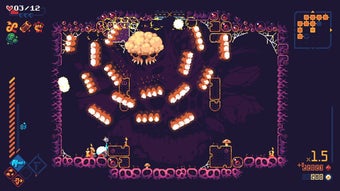
The pixel art presents sharp silhouettes and readable enemy animations, which helps during frenetic sequences. The soundtrack, composed by Joonas Turner, is adaptive and shifts with combat intensity, adding audible cues to rising danger. Visual and audio feedback combine so hit windows and enemy tells register reliably, which supports skillful play rather than hiding outcomes behind unclear effects or cramped presentation.
Is the challenge aligned with long-term engagement or quick sessions?
Progression balances immediate runs with permanent growth through a persistent skill tree that accumulates between attempts, encouraging repeated sessions. Boss encounters called Judges act as clear skill gates that test learned techniques and timing. The community response highlights a steep learning curve, so the game rewards players who invest time in short, focused runs and return with incremental upgrades to tackle deeper layers of the monolith.
This roguelite rewards precision players but asks for patience
This roguelite is a focused choice for players who prefer lightning-fast aerial combat and skill-based progression; it earned a 'Very Positive' reception for tight controls and combat feel, but the steep learning curve noted by users means newcomers face a sharp ramp. Best approached by those who enjoy repeated short runs and methodical improvement, it rewards practice with high-tempo, skilled encounters.
Pros
Air-focused combat rewards chaining dashes and attacks
Procedural dungeons provide new layouts and encounters each run
Persistent skill tree enables gradual, permanent progression
Adaptive soundtrack reacts to combat intensity, enhancing feedback
Cons
Steep difficulty curve noted by many players
Single-player only, no co-op or multiplayer options
High skill ceiling required for sustained aerial play
Laws concerning the use of this software vary from country to country. We do not encourage or condone the use of this program if it is in violation of these laws. Softonic may receive a referral fee if you click or buy any of the products featured here.